• Pedido de lunes a viernes antes de las 17:00, lo recibe mañana

  • Garantía del precio más bajo

  • Pague después de 30 días

9,2 8761 críticas

RJ45 Connectors

Good networks start with a reliable connection. The RJ45 connector is the small but important plug at the end of your network cable. It ensures a stable connection between cable and device. In this article you can read which variants there are, how to choose the right one and how to easily install it. This prevents malfunctions and gets the most out of your internet connection.

What is an RJ45 connector

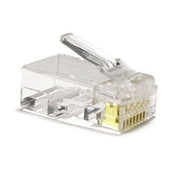
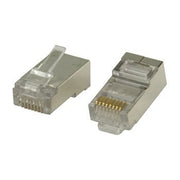
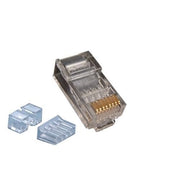
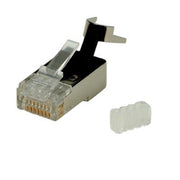
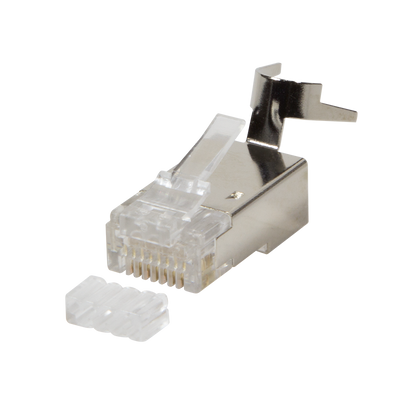
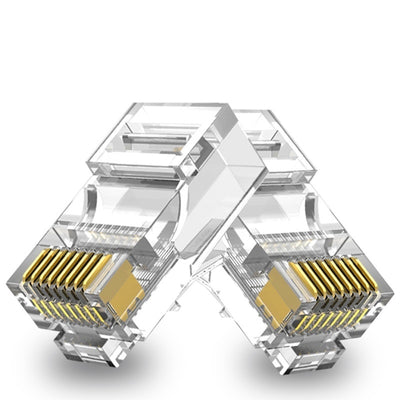
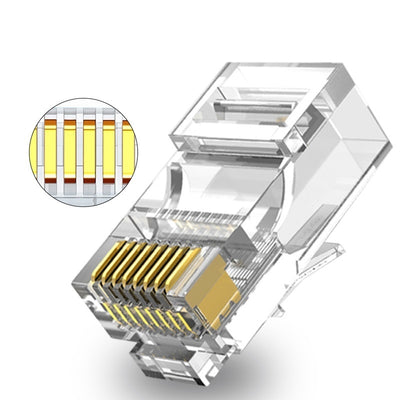
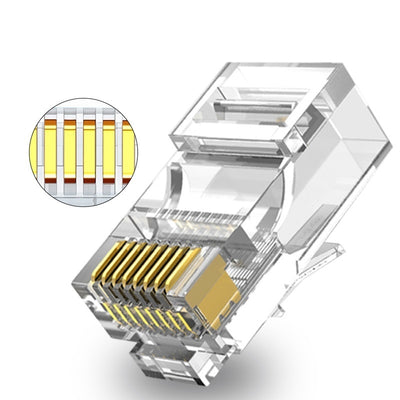
The RJ45 connector is the standard plug for network connections. It has eight contacts that perfectly match the eight wires in a network cable. If you connect it correctly, it makes direct contact with, for example, a modem, switch or wall socket. Thanks to the locking slip, it stays firmly in place.

This type of connector is mainly used in networks based on Ethernet. Think of home networks, business infrastructures and installations for cameras or home automation.

What types of RJ45 connectors are there?

RJ45 connectors differ per cable type. If you choose the wrong one, you will have problems with the signal transmission or it will simply not fit. These are the main differences:

  • Category: For each cable category there is a matching connector. Think of CAT5e, CAT6, CAT6A, CAT7 and CAT8.1. The higher the category, the tighter the tolerance.

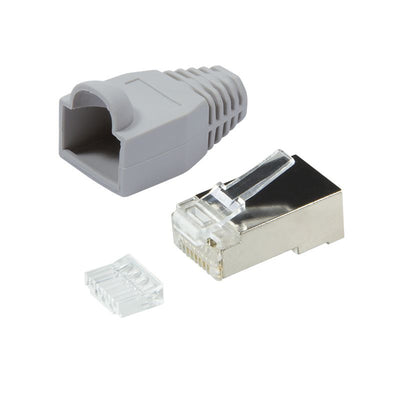
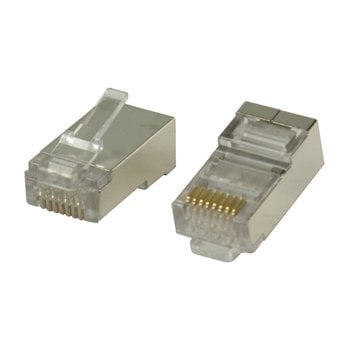
  • Shielding: There are UTP connectors without shielding and STP variants with shielding against interference.

  • Construction: There are connectors for round and flat cables. The type of core also plays a role: solid or flexible cores require a suitable contact structure.

Are you using a CAT6A S/FTP cable? Then you need a shielded connector that is suitable for thicker cores. On our page with RJ45 connectors you can easily filter on your cable type.

How to connect an RJ45 connector

Connecting an RJ45 connector may seem tricky, but with the right steps it goes smoothly:

  1. Strip the outer sheath of the cable a few centimeters.

  2. Spread the eight cores in the correct order according to the T568B color coding.

  3. Cut the veins straight across so that they are all the same length.

  4. Carefully slide them into the connector until they are all the way to the front.

  5. Use a crimping tool to secure the plug securely.

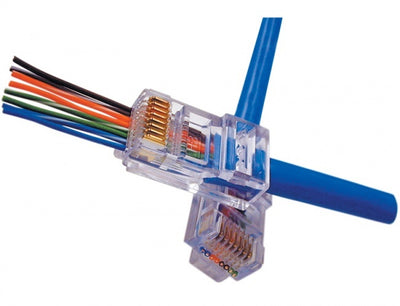
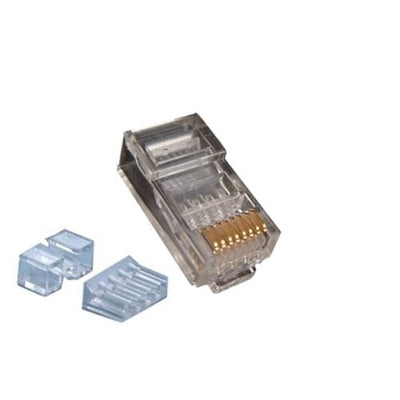
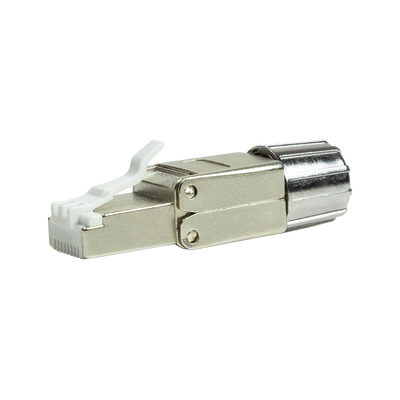
There are also tool-free connectors that do not require pliers. You simply click the wires into the plastic frame. Handy for quick jobs or if you do not have any tools at hand.

Which connector is suitable for your cable?

When choosing the right connector, you look at three things:

  • The cable category: For example CAT5e or CAT6A

  • The type of wire: Solid wires require different contact pins than flexible wires

  • The application: Indoor, outdoor or industrial use requires specific properties such as shielding or watertightness

Not sure? Use our network cable selection guide to make sure you make the right match.

Avoid common mistakes when connecting

A mistake during the connection can disrupt the entire connection. These are pitfalls that we often encounter:

  • The color coding is not applied correctly

  • The veins are not completely pushed through

  • The wrong pliers are used or the pliers are squeezed too hard

  • A shielded cable is connected to an unshielded connector

Avoid these mistakes by working calmly and checking in advance whether the connector fits your cable.

What to look for when buying a connector

Not every connector is of the same quality. Therefore, pay attention to these points:

  • The finish of the contact points: A gold-plated layer ensures better conductivity and less chance of corrosion

  • The sturdiness of the housing: Plastic is fine for home use, metal is better suited for intensive or industrial use

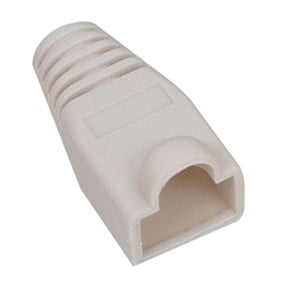
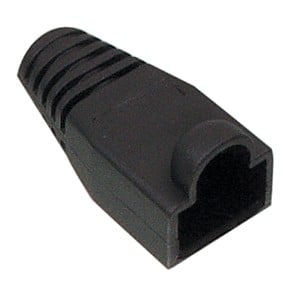
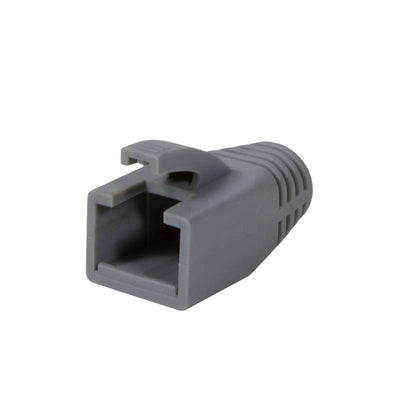
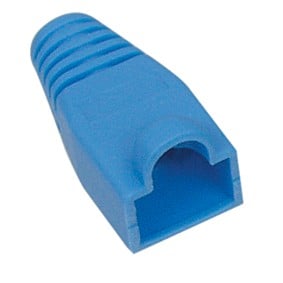
  • The method of insertion: Good connectors support the cable with a strain relief so that there is no tension on the wires

For installers, professional connectors are also available in value packs. See our installation materials for this.

How an RJ45 connector compares to other connections

RJ45 is the standard for data networks, but sometimes other connection methods are considered:

  • Coaxial connections: Only suitable for television signal, not for network

  • Fiber optic: High speeds, but more expensive and more difficult to install

  • USB to Ethernet adapters: Useful for temporary use, but not suitable for permanent installations

For almost all networks, RJ45 remains the most practical and universal choice.

Frequently Asked Questions about RJ45 Connectors

Do I always have to use a crimping tool?
Not always. For some models without tools you press the wires into a clamping system.

Why is my network not working?
Often the color sequence is not applied correctly or the veins are not pushed through far enough.

Can I use the same connector for indoor and outdoor use?
For outdoor use, it is better to choose waterproof and shielded variants.

What is the difference between T568A and T568B?
Both are standards for the sequence of cores, in Europe T568B is the most commonly used.


Choose the right connector immediately

Do you want to build or expand a network? View our complete range of RJ45 connectors and order easily online. You will receive quickly, clearly and without surprises.

78 items
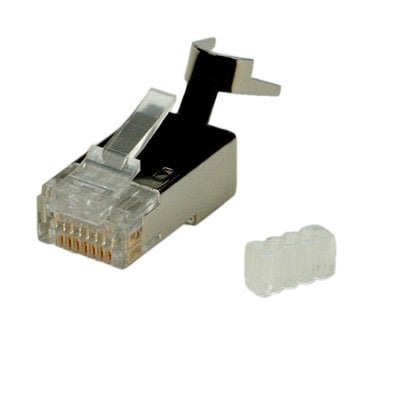
4.9/5(12 reviews) CAT6a/CAT7 Plug RJ45 - Shielded 10 pcs
  • CAT6a / CAT7
  • STP (shielded)
  • Solid core (AWG 22 - 24)
Delivered tomorrow
22,23 Incl. VAT18,37 Excl. VAT
Delivered tomorrow
1
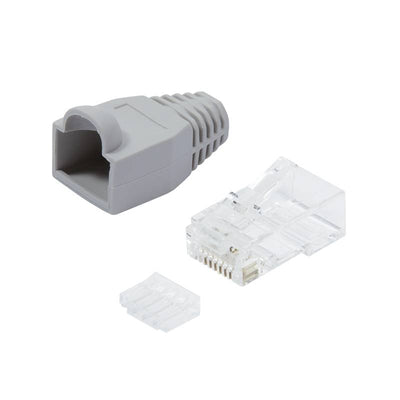
4.4/5(9 reviews) CAT6 Plug RJ45 - UTP 10 pcs
  • Cat6
  • UTP standard
  • Stranded + Solid cable
Delivered tomorrow
5,58 Incl. VAT4,61 Excl. VAT
Delivered tomorrow
1
4.8/5(6 reviews) CAT5e Plug RJ45 - UTP 10pcs
  • Cat5e
  • UTP standard
  • Stranded wire
Delivered tomorrow
2,92 Incl. VAT2,41 Excl. VAT
Delivered tomorrow
1
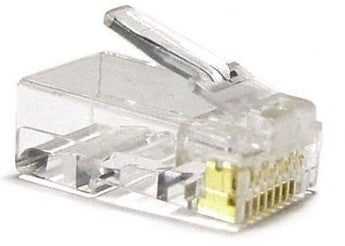
4.9/5(16 reviews) Easy CAT5e Plug RJ45 - UTP 10 pcs
  • Cat5e
  • UTP head-through (easy plug)
  • Stranded + Solid cable
Delivered tomorrow
4,83 Incl. VAT3,99 Excl. VAT
Delivered tomorrow
1
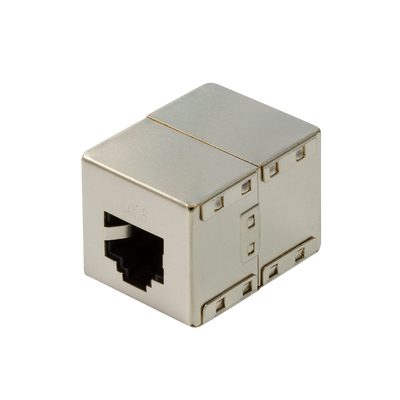
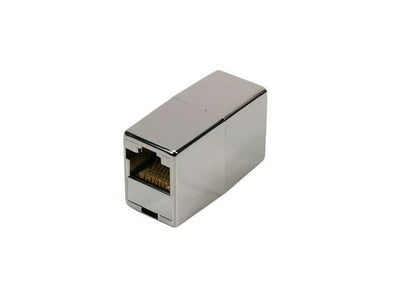
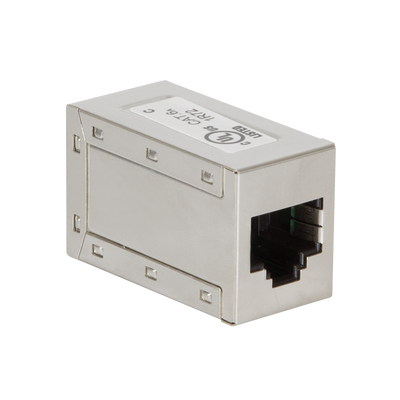
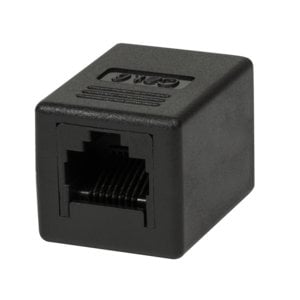
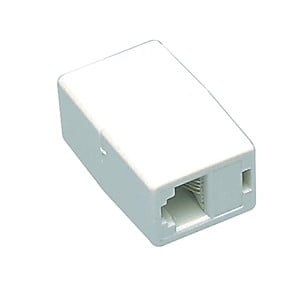
4.7/5(6 reviews) CAT6 RJ45 Coupling Shielded
Delivered tomorrow
3,86 Incl. VAT3,19 Excl. VAT
Delivered tomorrow
1
4.5/5(4 reviews) CAT6 Plug RJ45 - STP 10 pcs
  • Cat6
  • STP standard
  • Stranded + Solid cable
Delivery 3-5 working days
10,14 Incl. VAT8,38 Excl. VAT
Delivery 3-5 working days
1
5.0/5(4 reviews) CAT6a Modular Plug RJ45 - UTP 10 pcs
  • Cat6a + Cat7
  • UTP standard
  • Stranded + Solid cable
Delivered tomorrow
6,99 Incl. VAT5,78 Excl. VAT
Delivered tomorrow
1
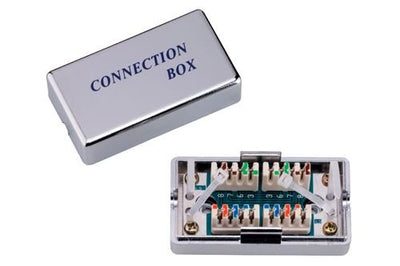
4.7/5(6 reviews) Cat6 Junction Box Shielded
Delivery 3-5 working days
4,17 Incl. VAT3,45 Excl. VAT
Delivery 3-5 working days
1
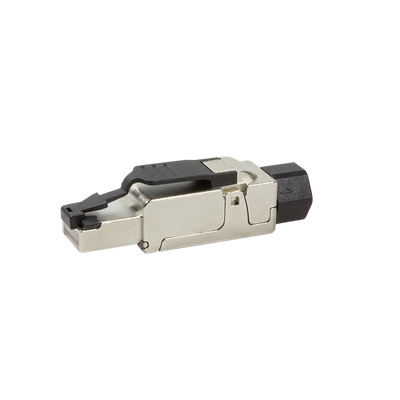
5.0/5(10 reviews) CAT6a Toolless Plug RJ45 - STP
  • Cat6a + Cat7
  • STP Toolless
  • Stranded + Solid cable
Delivered tomorrow
11,46 Incl. VAT9,47 Excl. VAT
Delivered tomorrow
1
4.5/5(6 reviews) Cat5e RJ45 Coupling Shielded
Delivered tomorrow
1,82 Incl. VAT1,50 Excl. VAT
Delivered tomorrow
1
5.0/5(4 reviews) Cat6a RJ45 Coupling Shielded
Delivered tomorrow
6,49 Incl. VAT5,36 Excl. VAT
Delivered tomorrow
1
4.9/5(8 reviews) CAT8.1 toolless plug RJ45 STP
  • Cat8.1
  • STP Toolless
  • Stranded + Solid cable
Delivered tomorrow
9,76 Incl. VAT8,07 Excl. VAT
Delivered tomorrow
1

Conectores RJ45

Qué es un conector RJ45

El conector RJ45 es el conector estándar para conexiones de red. Tiene ocho contactos que encajan perfectamente con los ocho hilos de un cable de red. Si se conecta correctamente, establece contacto directo con, por ejemplo, un módem, un switch o una toma de pared. Gracias a su clip de bloqueo, permanece firmemente sujeto.

Este tipo de conector se utiliza principalmente en redes basadas en Ethernet. Pensemos en redes domésticas, infraestructuras empresariales e instalaciones para cámaras o domótica.

Tipos de conectores RJ45

Los conectores RJ45 varían según el tipo de cable. Si eliges el incorrecto, tendrás problemas con la transmisión de la señal o simplemente no encajará. Estas son las principales diferencias:

  • Categoría: Para cada categoría de cable existe un conector adecuado. Piensa en CAT5e, CAT6, CAT6A, CAT7 y CAT8.1. Cuanto mayor es la categoría, más estrictas son las tolerancias.
  • Blindaje: Existen conectores UTP sin blindaje y variantes STP con blindaje contra interferencias.
  • Diseño: Existen conectores para cables redondos y planos. El tipo de hilo también influye: los núcleos sólidos o flexibles requieren una estructura de contacto adaptada.

¿Utilizas un cable CAT6A S/FTP? Entonces necesitas un conector blindado que sea adecuado para hilos más gruesos. En nuestra página de conectores RJ45 puedes filtrar fácilmente por tu tipo de cable.

Cómo conectar un conector RJ45

Conectar un conector RJ45 parece difícil, pero con los pasos adecuados es sencillo:

  1. Retira la cubierta exterior del cable unos centímetros.
  2. Separa los ocho hilos en el orden correcto según el código de colores T568B.
  3. Corta los hilos en línea recta para que todos tengan la misma longitud.
  4. Insértalos con cuidado en el conector hasta que queden completamente al fondo.
  5. Utiliza una pinza de crimpado para fijar firmemente el conector.

También hay conectores sin herramientas con los que no necesitas pinzas. Simplemente encajas los hilos en el marco de plástico. Útil para trabajos rápidos o si no tienes herramientas a mano.

Qué conector es el adecuado para tu cable

Al elegir el conector adecuado, debes tener en cuenta tres cosas:

  • La categoría del cable: Por ejemplo, CAT5e o CAT6A
  • El tipo de hilo: Los hilos sólidos necesitan pines de contacto diferentes a los hilos flexibles
  • La aplicación: El uso en interiores, exteriores o industrial requiere características específicas como el blindaje o la impermeabilidad

¿Tienes dudas? Utiliza nuestra guía de selección de cables de red para asegurarte de que eliges la combinación correcta.

Cómo evitar errores comunes al conectar

Un error durante la conexión puede interferir con toda la conexión. Estos son algunos de los problemas que encontramos con frecuencia:

  • El código de colores no se ha aplicado correctamente
  • Los hilos no se han introducido completamente
  • Se utiliza una pinza incorrecta o se ha apretado demasiado
  • Se conecta un cable blindado a un conector sin blindaje

Evita estos errores trabajando con calma y comprobando de antemano que el conector sea compatible con tu cable.

Qué tener en cuenta al comprar un conector

No todos los conectores tienen la misma calidad. Por ello, ten en cuenta los siguientes puntos:

  • El acabado de los contactos: Una capa de oro proporciona una mejor conductividad y reduce las posibilidades de corrosión
  • La resistencia de la carcasa: El plástico es perfecto para uso doméstico, el metal es más adecuado para un uso intensivo o industrial
  • La forma de inserción: Los buenos conectores sujetan el cable con un alivio de tracción para que no se ejerte tensión sobre los hilos

Para instaladores también hay conectores profesionales disponibles en paquetes económicos. Para ello, consulta nuestros materiales de instalación.

Cómo se compara un conector RJ45 con otras conexiones

RJ45 es el estándar para las redes de datos, pero a veces se consideran otros métodos de conexión:

  • Conexiones coaxiales: Solo adecuadas para señales de televisión, no para redes
  • Fibra óptica: Alta velocidad, pero más cara y difícil de instalar
  • Adaptadores USB a Ethernet: Útiles para uso temporal, pero no adecuados para instalaciones fijas

Para casi todas las redes, RJ45 sigue siendo la opción más práctica y universal.

Preguntas frecuentes sobre conectores RJ45

¿Debo usar siempre una pinza de crimpado?
No siempre. En algunos modelos sin herramientas, los hilos se fijan en un sistema de sujeción mediante presión.

¿Por qué no funciona mi red?
A menudo, el orden de los colores no se ha aplicado correctamente o los hilos no se han introducido lo suficientemente lejos.

¿Puedo usar el mismo conector para interiores y exteriores?
Para uso en exteriores, es mejor elegir variantes impermeables y blindadas.

¿Cuál es la diferencia entre T568A y T568B?
Ambos son estándares para el orden de los hilos; en Europa, el más utilizado es T568B.

Elige directamente el conector adecuado

¿Quieres instalar o ampliar una red? Consulta nuestra gama completa de conectores RJ45 y haz tu pedido fácilmente en línea. Lo recibirás rápido, claro y sin sorpresas.

Login

Forgot your password?

Don't have an account yet?
Create account